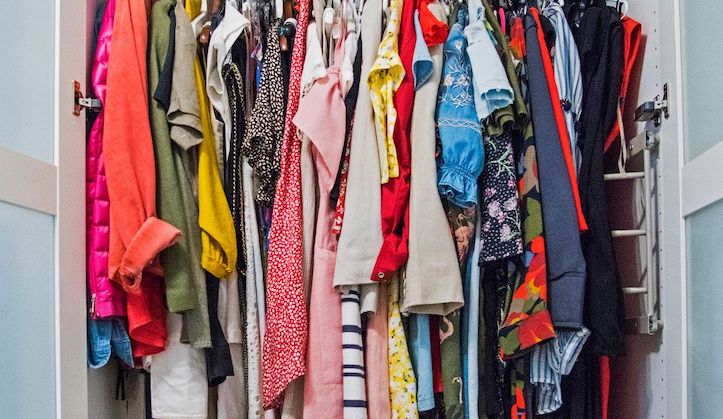
I’ve never considered myself a compulsive shopper though the size of my book and shoe collections might suggest otherwise. But I still have far too much “stuff” in my home — clothes I’ve never (or seldom) worn; boxes of unfinished craft projects; cosmetics bought on impulse; spices past their prime etc etc.

I suspect I’m not alone in going through phases of trying to sort out the mess; embarking on some kind of decluttering exercise. My initial enthusiasm never lasts long though — the whole process usually proves too mind-numbingly boring. Or ridiculous (in no version of my life can I ever anticipate evaluating which possessions “bring me joy” or thanking my handbags for their service at the end of the day as per Marie Kondo.

Maybe I was looking for something more insightful than a self-help manual when I came across The Year of Less by Cait Flanders. It documents a period in her life when she set out to curb her impulse buying and learn to live with fewer possessions.

She was in her late twenties at the time and had clawed her way back from binge drinking and almost $30,000 of consumer debt. But she was still spending more and saving less than she wanted.

Her plan was to live with less. She could shop for essentials (toiletries, groceries, fuel for her car) but purchases of new clothes, books, magazines, electronics, home decor and take-away coffee (costing her $100 a month) were banned. She could buy items on her “approved shopping list” such as gifts for relatives/friends and could replace items that were broken or in very poor condition.

By the end of her year’s experiment she’d got rid of 70% of her belongings — discarding most of her clothes until she had just 27 items left — and saved almost half her income. As the book’s subtitle “How I Stopped Shopping, Gave Away My Belongings, and Discovered Life Is Worth More Than Anything You Can Buy in a Store” indicates, the results went far beyond monetary savings. At the end of 12 monhs, she’d changed career; formed new friendships and felt more fulfilled.

The best gift the ban had given me was the tools to take control of my life and get a fresh start as my real self. It challenged me. It turned my life upside down. It helped me save $17,000 in a single year. And then it saved me.

The Year of Less was interesting but only up to a point. Much of the book dealt with her behaviours and attitudes rather than the practical aspects for example., of how she decided what to buy/not to buy.

So we got page after page about the addictive behaviours of her early adult years (binge-drinking to the point of unconsciousness) and the emotions triggered by a break-up with a boyfriend. Most extraordinary of all was her response to her parents’ announcement of their divorce. Sadness I can understand. But unable to work and curling up in bed every night at 6pm seemed an extreme reaction.

The Year of Less is more a memoir about how a troubled girl sorts out her life, than a guide to how to live a less consumerist life. it’s not until we get to the final chapter that she encapsulates everything she learned during her Year of Less. But you have to plod through a lot of , frankly, not very interesting soul-searching to get to the key take-away message:

The ban uncovered the truth, which was than when you decide to want less, you can buy less and ultimately need less money.

It’s simple really….

14 responses to “The Year of Less by Cait Flanders — inside the mind of a shopaholic”

  1. The one item thing is a good one, I also now have a rule that more books have to leave the house than join it every month which gets me thinking about what I want to keep really.

  2. These books really appeal to me but I do think they are all really saying the same thing. Like you, I’d like to hear more practical advise than personal back story

    1. i think she wrote it as a way of dealing with emotions – a sort of catharsis in a sense

  3. I can see that this is interesting ‘to a point’! I did have a year when I decided to buy no clothes and it was great because it changed my habits, so I’m a bit interested!

    1. That must have taken a lot of will power. did you find it tough to keep to the goal of no new clothes?

  4. FWIW I think it’s a good start to learn the strategies that marketers use. If we take books, for example, when those emails roll into my inbox, I try to work out how they are pitching it to me in general and me in particular. FOMO (Fear of Missing Out) is an obvious one, but also if the pitch is directly to me because I’ve reviewed books for that publisher/publicist before, there can be elements that apply to me in particular. Or they think they do. They think I want to be among the first to review a book because that definitely brings readers and subscribers. And yes, that’s true but only with particular authors, particular themes. (e.g. I don’t care if I’m not the first to review prize nominations; I don’t care if I never read the latest memoir about addiction.) So before I say yes to the pitch the book has to pass my tests. And I know what those tests are because I have worked out exactly what I like.
    It’s the same with clothes. I stick to the same colours year in year out no matter what the fashion industry says. I have a staple wardrobe and I jazz it up with a scarf. I know what I need: pants, tops, a jacket and longline cardis for summer and winter and everything has to go with everything else. I know what suits me and I don’t buy anything else. I don’t even look at the adverts. I can do this because I do not care about fashion, and I have better things to do than go shopping.
    I think this is the key. Young people get sucked into making shopping their hobby and if it’s their hobby, that’s what they do in their spare time. And if their friendship group has the same hobby too, then they do soon stack up credit card debt. I imagine it’s very hard to leave the credit card at home (or better still, with mum and dad) and go shopping and not buy anything, and if that tests the friendship that’s hard too.

    1. Her friendships were indeed tested because her friends felt uncomfortable when they were out shopping and she wouldn’t buy anything. It was all about them, not about her.

      I don’t follow fashion trends either and won’t buy clothing on line because I can’t tell anything about the quality or the actual colour let alone the fit. So marketing messages from clothing companies are easily ignored.

      1. Yes. But I think it’s easier when we are older because we are most confident about what we like and what matters to us, and we’re also not under that YA pressure to have a lot of friends, virtual and F2F as if that is a measure of self-worth.

        1. So very true. It’s challenging being a youngster now – social media just ramps up that FOMO factor so much

  5. I’ve seen this book around and am attracted to titles such as this but I did not pick it up. So often the text of these types of books tend to drift away from what I think they are about. Now I know I won’t pick it up. The comment you made that really puts me off this book is her reaction to her parents divorce. That would really annoy me. 😳🌻

    1. it did annoy me hugely. I know we all grieve in different ways but that just felt excessive.

      1. Hahaha I know what you mean.

  6. I desperately need to declutter and frankly need a good combination of advice on getting the right mindset and also the practicalities (and I have the same reaction to Marie Kondo too..) I don’t know that this book is going to do it for me!

    1. The best advice I ever saw was to eliminate one item from your house every day – could be as simple as one item of clothing or something that requires more time like a file of paperwork. Over time the clutter decreases without having to spend a huge amount of effort

We're all friends here. Come and join the conversation

This site uses Akismet to reduce spam. Learn how your comment data is processed.

Trending

Discover more from

Subscribe now to keep reading and get access to the full archive.

Continue reading