
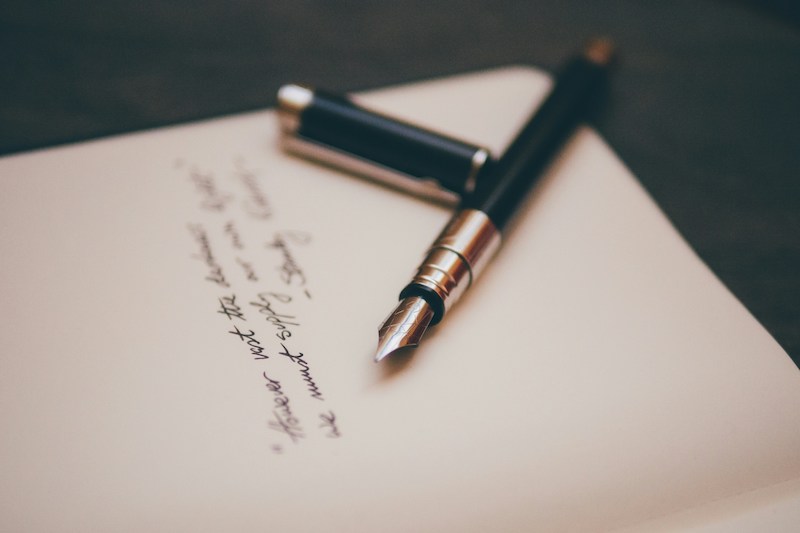

One of my favourite episodes in Alan Bennett’s Talking Heads series of dramatic monologues concerns a voracious letter-writer. The main character in A Lady of Letters, Irene Ruddock , hides her loneliness behind a stream of letters to newspapers, grieving relatives of a woman she barely knew, The Queen, crematorium officials and the police.
Sybil Van Antwerp, the central figure in Virginia Evans’s The Correspondent, is just as voracious a letter-writer. The recipients of her communications are more personal — they include her brother, a best friend, the troubled young son of a former colleague and two potential suitors. She also writes to real-life figures, including Ann Patchett, George Lucas and Joan Didion.
Just as with Alan Bennett’s character, Sybil writes with purpose and precision; sometimes writing a first draft to ensure she has chosen the right tone and construction. She’s direct, tetchy and often at odds with the world. “Dear Rosalie,” begins one letter to a long-term friend, “I haven’t heard from you. Waiting for your response to my last, but cannot wait for ever.” În another she castigates a newspaper columnist for errors in his piece about her work in the legal system.
Through letters spanning eight years, we uncover the history of Sybil’s life as a 73-year-old widow, her reputation as a formidable legal clerk and the distant relationships with her two children. Her letters are honest – but only up to point. It’s only through an unsent letter to an unnamed correspondent that we discover the truth about a family tragedy and Sybil’s fears that her failing eyesight will bring an end to a lifetime of letter-writing.
As fascinating as this cranky, sharp-tongued woman is, The Correspondent isn’t just about the letter-writer. It’s an exploration of the joys — and limitations — of the art of written correspondence itself.
Sybil has always made sense of her world through writing, her correspondence has been, as she puts it, “the mainstay of my life” and a true expression of who she really is Though she does use email, she’s not a fan — they are no no substitute for the real thing. True letters, she believes, help keep the memory of a person alive.
Imagine the letters one has sent out into the world, the letters received back in return are like the pieces of a magnificent puzzle or, a better metaphor, the links of a long chain and even if those links are never put back together .. even if they remain for the rest of time, dispersed across the earth like the fragile blown seeds of a dandelion, isn’t there something wonderful in that, to think that a story of one’s life is preserved in some way, that this letter may one day mean something , even if it is very small, to someone?
But as the novel progresses we see how she begins to question the validity of that belief.
All those letteers, I wonder if all of it was a waste. Pages and pages of letters, I wonder what has it all been really. I’ll go blind and they will mean nothing to me. It will be as if they aren’t there and does that mean, in a way, they were never there.
As readers we detect — way before Sybil does herself — that the letters act as a defence mechanism. A way of putting distance between herself and other people so she doesn’t have to face uncomfortable truths. Only by the end of the novel do we learn why this protective shield is so important to her; why she is so remote from her daughter and son yet shows such affection for a friend’s child.
The Correspondent is a highly-readable novel, astutely navigating the challenges of the epistolary device and (largely) first-person narrative. Yes it does require some willingness to accept unreality (would Joan Didion really share her thoughts with a reader about the loss of a child?) but put those aside, and you’re left with a solid story of about a life and grief.
For an alternative perspective on The Correspondent, take a look at the review by Lisa at ANZlitlovers
Postscript
Since writing my review, The Correspondent has been named as the winner of the Women’s Prize for Fiction for 2026.




We're all friends here. Come and join the conversation