

1. When did you join The Classics Club? How many titles have you read for the club so far? Share a link to your latest classics club list.
I joined the Classics Club in 2012. I confess that it took me a lot longer than the “required” five years to read 50 books from my initial list. Eight years in fact. I’m now on list number two which I started in June 2022 and from which I’ve read 19 to date.
2 What classic are you planning to read next? Why? Is there a book first published in 1926 that you plan to read this year?
I’m not a planner so don’t tend to know what I’m going to read next. From my Classics Club list my next pick might (but only might) be either Thirty Nine Steps by John Buchan, The Wings of the Dove by Henry James or Of Human Bondage by Somerset Maugham.
I don’t have any 1926 titles in my list.
3 Best book you’ve read so far with the club? Why?
Oh this is a tough question when I’ve read many outstanding books from my lists. I’ll pick a couple from each list. L’Assommoir by Émile Zola and All Passion Spent by Vita Sackville West from list one and A Thousand Cranes by Yasunari Kawabata and Rebecca by Daphne du Maurier from list two.
4 Classic author who has the most works on your club list? Or, classic author you’ve read the most works by?
Émile Zola takes top billing for the author I’ve read most. I’ve just finished reading The Dream which is the sixth book to date of us that I’ve read.
5 Which author’s work you are familiar with might it have been fun to approach by reading what s/he wrote in order of publication
I’d be interested to see how Elizabeth Gaskell’s novels progressed over time. Did her attitudes towards social issues of the Victorian era change/evolve in any way the more she knew about them through living in Manchester.
6. First classic you ever read?
Probably one we had to read in school the title of which has long been forgotten. I went off piste when I was sixteen and began a phase of borrowing books from the library by authors from around the world. I understood barely a fraction of them but enjoyed the experience of reading Nausea by Jean Paul Sartre and The Outsider by Albert Camus.
7 Favourite children’s classic?
It might have been Treasure Island but could equally have been Black Beauty. Childhood was so long ago I can’t honestly remember.
8 Which classic is your most memorable classic to date? Why?
I’ll pick Crime and Punishment by Fyodor Dostoevsky because of the circumstances in which I read this book. I took it on a transatlantic flight and was so hooked on the book that I was annoyed when we landed and I had just five pages left to read. I wanted to stay in my seat and finish it, but the crew had other ideas.
9 Least favourite classic? Why?
Obviously this would be one of the books I never finished. Like The Man Who Knew Too Much by G. K Chesterton or Tender is the Night by Ernest Hemingway.F Scott Fitzgerald (corrected thanks to WordsandPeace)
10 Favourite movie or TV adaption of a classic?
It would have to be the 1995 BBC adaptation of Pride and Prejudice with Jennifer Ehle and Colin Firth in the lead roles.
11 Favourite biography about a classic author you’ve read, or the biography on a classic author you most want to read, if any?
Juliet Barker’s biography of the Brontë sisters impressed me so much when I read it in 1994 that I kept it and it’s still on my bookshelves.
12 Favourite classic author in translation? What do you look for in a classic translations?
As answered in question 4, this would be Émile Zola. Though I’ve read ten of his novels to date there are another ten left to read in his Rougon-Marquet cycle.
13 Do you have a favourite classic poet/poem, playwright/play? Why do you love it?
I can’t say that I do, beyond the obvious answer of Shakespeare.
14 Which classic character most reminds you of yourself?
Maybe Jo March from Little Women because of her love of reading and also her messy habits.
15 What is the oldest classic you have read or plan to read? Why?
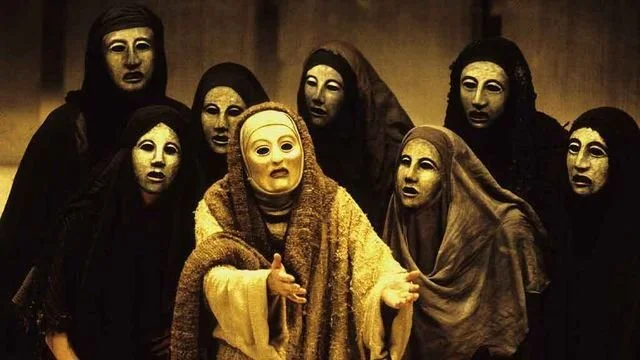
The oldest I’ve read was Medea by Euripedes which dates from about 431 BC. In my current list the oldest is Belinda by Maria Edgeworth, published in 1801.
16 If a sudden announcement was made that 500 more pages had been discovered after the original “THE END” on a classic title you read and loved, which title would you be happiest to see continued?
None. When a novel is over, it’s over even if it ends without full resolution. I like to use my own imagination about what could happen next to the characters.
17 Favourite edition (or series) of a classic you own, or wished you owned, if any?
Oxford World Classics is my preferred choice for Zola’s novels. I love the artwork on the cover and find the introductions insightful. For more modern classics I do love the Virago Modern Classics editions (the ones with the green covers)
18 Do you reread classics? Why, or why not?
Middlemarch I’ve read six times now, Pride and Prejudice about four times. For me a true definition of a classic is a novel you can read and re-read and find something new in it each time. I just wish I had more time to go back to some of my old favourites.
19 Has there been a classic title you simply could not finish?
There have been many over the years. I gave up on Pamela by Samuel Richardson having struggled through a quarter of it; Tale of Two Cities went the same way. I’ve tried reading that book four times now and have abandoned it at pretty much the same point each time. It’s clearly not one for me.
20 Has there been a classic title you expected to dislike and ended up loving?
Cannery Row was an eye-opener for me. I’d always thought Steinbeck just wrote gloomy tales like Grapes of Wrath so it was a revelation to discover the humour in this novella
21 List five fellow Classic Clubbers whose blogs you frequent. What makes you love their blogs?
My favourites are book blogs that offer insightful reviews, often of books I’ve not read or authors I’ve not come across before. Take a blow please:
22 If you’ve ever participated in a readalong on a classic, tell us about the experience?
I might have done one readalong via LibraryThing back in the early days of this blog. I didn’t enjoy it very much because the pace of reading was out of kilter with my own. Some weeks I was ahead of the schedule and other weeks, a long way behind so it made the online discussions complicated.
I did sign up in 2022 to do a readlong of Voss by Patrick White hosted by Brona (one of the Classic Club moderators). Real life intervened and I never got very far into the novel — my bookmark is still in place however ready for the day when I pick up the book once more.
23 If you could appeal for a readalong with others for any classic title, which title would you name? Why?
Based on my (admittedly limited) experience I don’t think I’m in a hurry to join another readalong
24 What are you favourite bits about being a part of The Classics Club?
It’s the sense of connection with like minded people all around the world that I appreciate the most. We may be reading different books but we are united by our love of good fiction.
25 What would like to see more of (or less of) on The Classics Club?
A calendar of events could be helpful so I know when the Classics Club spin will be held for example. I always seem to get caught out and then scramble to get the list done and the reading done in time.
26 Question you wish was on this questionnaire? (Ask and answer it!)
Which classic author (or novel) would you choose as your Desert Island companion? Mine would be Middlemarch by George Eliot.


We're all friends here. Come and join the conversation