


Painters and writers. Smoke-filled cafes. Rain-slicked streets, Grubby, cheap hotels.
This is life in 1920s bohemian Paris as seen in Jean Rhys’s first novel. Quartet. Exciting, liberated, vibrant on the outside but with a dark underbelly, particularly for those without money like the young Englishwoman Marya Zelli,
She finds herself stranded and penniless in the city when her Polish husband is arrested and imprisoned for trafficking in stolen art works.
Enter Hugh and Lois Heidler, a wealthy English couple who “rescue” Marya by inviting her to live with them. Except rescue isn’t quite the right word.
Once she’s under their roof, Marya becomes the target of Hugh’s desires, and eventually his lover. This is no grande passion or romantic relationship however; it’s all too calculated for that. Lois and Hugh view the whole thing as some sort of game, one whose rules they understand but which Marya is emotionally ill equipped to play.
As the weeks slip by, Marya slides further and further into a kind of despair she can’t quite name, let alone escape. She knows something is wrong with the arrangement she’s in, but she can’t decide who’s responsible for it — Hugh, who initiated it; Lois, who oversees it with chilling detachment; or herself, for allowing it to continue.
Rhys never resolves that ambiguity for the reader either. Marya isn’t constructed as purely as victim or martyr. She’s definitely the sacrificial lamb of two people who have more money and higher social standing but she also shows a lack of ability to think rationally about her situation.
By the end, Marya hasn’t grown wiser or stronger in any conventional sense. She’s just more tired, more used up. It’s a bleak note to end on, but then the whole book is rather bleak. Her level of culpability doesn’t disguise the fact that she’s worn out, wrung out by trying to keep afloat. .
I’ve realised, you see, that life is cruel and horrible to unprotected people. I think life is cruel. I think people are cruel. … Well, I’ve got used to the idea of facing cruelty. One can, you know. The moment comes when even the softest person doesn’t care a damn any more; and that’s a precious moment. One oughtn’t to waste it.
One of the things that makes Quartet fascinating is Rhys’s depiction of Paris. She knew the city from its underside having lived there with her first husband and — just like Marya — left destitute when he was imprisoned. Her Paris is nothing like the liberated, avant garde city that attracted people such as Ernest Hemmingway in the 1920s.
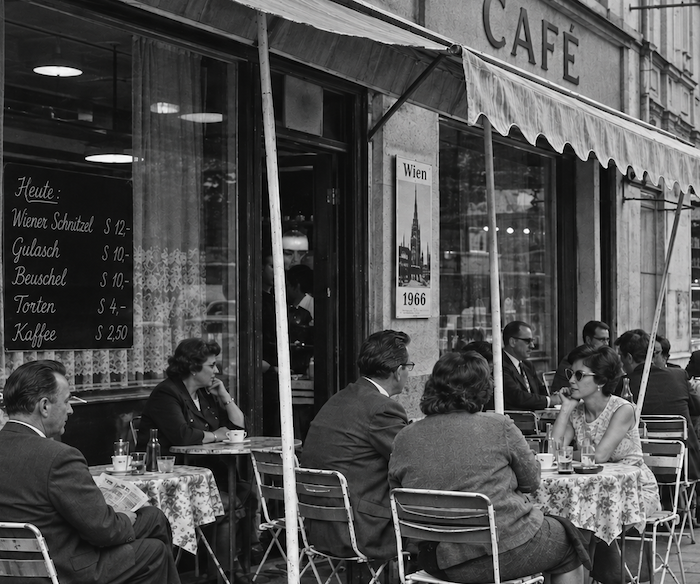
Quartet is full of scenes in cafés and clubs but they’re not particularly glamorous and anyway, Marya is never fully a part of that world. She always seems to be on the fringe, looking at happiness but never able to experience it herself. With no money and no-one to protect her from predators like Hubert, she’s always the outsider looking in.
Marya stayed there for a long time watching a little, frail blonde girl, who careered past, holding tightly on to the neck of her steed, her face tense and strained with delight. The merry-go-round made her feel more normal, less like a grey ghost walking in a vague shadowy world.
Quartet is an impressive debut though it ‘s certainly bleak. It essentially tracks in great detail, the mental breakdown of a vulnerable woman. There’s little sense that there will be a welcome reversal of fortune for Marya . Instead, we get an ending that seems particularly desolate.
End note
Quartet was the book I landed in the most recent Classics Club spin.
For additional perspectives take a look at Lisa’s review at ANZLitLovers and Kim’s at Reading Matters.



We're all friends here. Come and join the conversation