
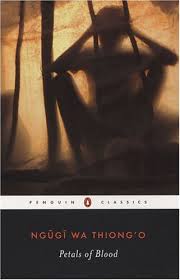
 Some novels can make you laugh; some can make you cry. Just occasionally they can make you angry.
There was little to laugh at in Petals of Blood by Ngũgĩ wa Thiong’o. This is a book designed to evoke quite a different set of reactions, a book it would be difficult to read and not feel frustrated, exasperated and even outraged.
This is a novel about disillusionment; about the loss of the ideal of independence and the destruction of hope; about betrayal and hypocrisy and about the triumph of corruption over humanity. So incendiary was this novel at the time of its publication in 1977 that its author was imprisoned without charges by a Kenyan government sensitive to criticism of its manner of ruling their newly-independent nation. His arrest provoked a worldwide protest and led to his adoption by Amnesty International as a Prisoner of Conscience.
Petals of Blood opens with the arrest and detention of four people from the village of Ilmorog. It’s a village geographically remote from the centre of government and remote from the minds of those who form that government. Ilmorog
One night three African directors of a foreign-owned brewery in the village are murdered in an arson attack. Four suspects are quickly arrested and detained for questioning: Munira, the headmaster of the village’s small school; Karega his assistant teacher, Abdullah, the crippled owner of the local store and Wanja the beautiful, spirited barmaid/shop assistant. The four are linked to each other through friendship, to the fortunes of Ilmorog and the fortunes of Kenya itself.
Ngugi uses these four characters to unfold a human drama, telling the story in flashback to twelve years before the fire when Munira had arrived in Ilmorog to set up the school. Through the individual stories of the quartet we discover their past disappointments and frustrations with post independent Kenya motivate them to push for change. When the rains fail, the crops wither and the villagers begin to die, they hatch a plan to lead the villagers on a long walk to Nairobi, to lobby their elected officials for help.
…it was they outside there who ought to dance to the needs of the people. Now it seemed that authority, power, everything, was outside Ilmorog… out there….in the big city. They must go and confront that which had been the cause of their empty granaries, that which had sapped their energies, and caused their weakness. Long ago when their cattle and goats were taken by hostile nations, the warriors went out, followed them and would not return until they had recovered their stolen wealth. Now Ilmorog’s own heart ad been stole. They would follow to recover it. It was a new kind of war… but war all the same.
The walk confronts them with an even harsher reality. Modern Kenya is dominated by corrupt businessmen and politicians who have quickly and conveniently forgotten the high ideals of the revolt they waged to expel the British. No-one in this new order, neither church or state, cares about the plight of the people of a remote village. Despised and patronised but with all appeals for help rejected, they return home dejected.
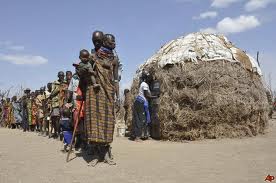 The exodus is an emotive set piece which symbolises the moral decline that Ngugi sees permeate the country. But in case we didn’t quite understand his point, he uses the second half of the novel to reinforce the message. The efforts of the villagers to draw attention to their community have unfortunate consequences which render them vulnerable to commercial opportunism, political expediency and religious hypocrisy.
By the end, the four friends feel a sense of betrayal by those in power. Yet despite the personal losses they suffer, they never lose their faith that one day, Kenya will fulfil its true destiny. This time it will be a country run by the people themselves.
Tomorrow it would be the workers and the peasants leading the struggle and seizing power to overturn the system of all its preying bloodthirsty gods and gnomic angels, bringing to an end the reign of the few over the many and the era of drinking blood and feasting on human flesh. Then, only then,would the kingdom of man and woman really begin, joying and loving in creative labour.
 Political corruption, social injustice, the struggle for freedom are not not uncommon themes in African literature. But Petals of Blood is one of the most strongly narrated indictments of a regime that assumed power with a promise of ending the inequality of its colonial masters only to perpetuate the same oppressions and divisions. Little wonder those in power were too afraid to let this author continue unfettered in his critique.
The Verdict
A truly remarkable novel. Difficult at times to read unless you are familiar with the country’s history. But it’s passionate depiction of the corrupting influence of power blended with some wonderfully portrayed characters, make this a compelling book.



We’re all friends here. Come and join the conversation