

No Highway was published in 1948 at a time when little was known about metal fatigue. This is what causes microscopic cracks to appear in structures and cause sudden, complete failure.
Shute’s novel imagines a scenario where questions are raised about the safety of the newly-launched Rutland Reindeer aircraft, the jewel in the crown of the cross-Atlantic service. Raising the alarm is Mr Honey, a scientist based at the Royal Aircraft Establishment at Farnborough , England.
The problem is that Mr Honey is considered rather odd by colleagues and senior officers alike. He’s shabbily dressed, doesn’t relate well to other people and is known to take a close interest in pseudo-scientific ideas like pyramidology and psychic readings.
So when his experiments on a Reindeer tailplane suggest it will fail after around 1,400 in flight, no-one pays him any attention. No-one that is, until a new boss arrives to run the Farnborough operation and makes a connection with a recent crash of a Reindeer in Labrador with all lives lost. Dennis Scott — the narrator of No Highway — learns that plane had done almost the same number of hours that Mr Honey’s tests indicate lead to fractures in the metal structure. Scott is convinced this is no coincidence and all Reindeer flights should be immediately curtailed — a move that inevitably is met with opposition from the airline company.
There’s only one way to discover if Honey is right — he’ll have to get to the crash site in Labrador and examine the wreckage for himself. On arrival in Canada, he takes an action that cements his reputation as a crackpot and puts his career at risk.
All is resolved through the combined efforts of Dennis Scott, an attractive young stewardess and a Hollywood film star. In the process, Honey’s unkempt and dirty house gets a through clean for the first time since his wife’s death and his 12-year-old daughter discovers the delights of Swallows and Amazons.
No Highway is an entertaining novel though gets a little repetitive and dry when it comes to the details of aircraft engineering and testing. The narrative point of view is odd — much of it is written as a first person account by Dennis Scott but he keeps stepping outside that perspective to relate events he doesn’t experience personally. So we get accounts of Honey’s feelings while in mid flight, his actions on the ground during a stop over in Nova Scotia and what the actress and stewardess think of him. It’s quite jarring to rapidly switch from one to another.
But I did enjoy the character of Honey. He’s the most vividly presented of all the characters, coming alive right from the opening where he presents himself as a shabby, sallow-faced man in a tiny office covering sheet after sheet with his test results and theories., and looking very much wlike “a rather tired and discontented frog. ” His outward appearance belies his deep intellect, a third for knowledge and — above all — a high degree of integrity.
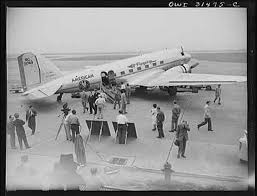
This novel was written during the late 1940s when air travel was gaining popularity and becoming less the purview of the wealthy. There’s a wonderful scene when Honey boards his flight to the US that had me wishing for times when air travel was a relaxing experience. No lengthy queues, sardine-type seating and supplements for every drink or snack.
In the warm, brightly lit cabin of the aircraft, he was received by a tall, dark girl in the uniform of a stewardess …. she showed him to his seat and took his coat and hat from him and saw that he was comfortably settled down with magazines within his reach.
Yes you can experience this level of service today — but only if you’re prepared to fork out a four figure sum for a ticket on the same route.
No Highway was the book I landed in the ClassicsClub Spin#42. I’m astounded that I read it well before the “deadline” of December 21.



We're all friends here. Come and join the conversation