
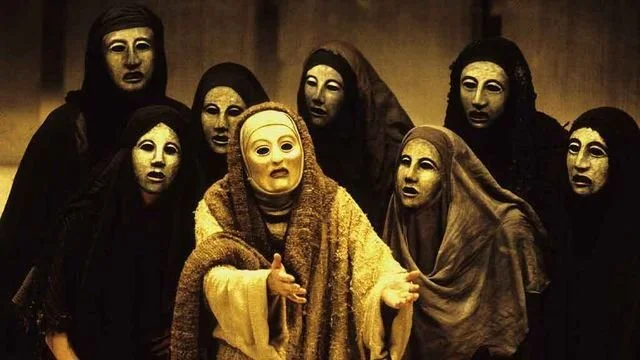
In ancient Sicily two jobless young potters embark on an audacious scheme to stage a production of Greek tragedies in a quarry.

The pair have oodles of passion and enthusiasm but little common sense. They don’t have two drachmas to rub together. And they completely lack experience of the theatrical world.
What could possibly go wrong?
Rather a lot as it turns out because they completely misjudge how the authorities and citizens of Syracuse will react to their scheme.
The time is 412BC, two years after the latest skirmish in the Peloponnesian War which saw an invading Athenian force repelled by Sicily. Thousands of defeated Athenian soldiers have been left to starve in a disused quarry in Syracuse. It’s these prisoners of war that the two potters, Gelon and Lampo, plan to recruit as their actors.
Bribed with goatskins of wine and scraps of food, the imprisoned men are soon regaling Gelon and Lampo with lines from plays by the Athenian tragedian Euripides. It’s but a short step then, they believe, to turn them into a cast to perform two of his plays: Medea and his latest work, The Trojan Women.
Glorious Exploits follows the pair as they fumble their way through the challenges of producing a play. They’re so buoyed up by the project that they lose sight of the dangers ahead. For not everyone in Syracuse is happy at the attention being given to a play from Athens and performed by Athenians— their sworn enemy. Tensions escalate as the narrative moves towards a single night that will change the lives of everyone involved.
This is a strange book. It’s written in modern day Irish vernacular which sounds off kilter initially because the prose rapidly shifts ground. In the midst of a conversation about Cyclops, Diocles and Homer one of the would-be impressarios comes out with “Ma tells me my da had one eye” . Other snatches of dialogue wouldn’t look out of place in a Roddy Doyle novel.
Then there’s the question of humour.
Glorious Heresies won the Wodehouse Prize for comic fiction and the blurb on my copy repeately mention how funny it is. Emma Donaghue found it “shockingly funny” while the Washington Post considered it “stunningly fun”
The naive antics of a pair of hapless youths with lofty dreams could be considered amusing. And yet that’s out of synch with the novel’s underlying themes of poverty, incarceration and exploitation. The attempt to find humour in these situations marred the first 100 pages or so — it was only in the second half when the comic element faded that I started to get more interested.
It’s a well written novel and a clever idea but fell a bit short on the execution for me.



We're all friends here. Come and join the conversation