
 Anyone with more than a passing interest in studying literature will not get too far into the subject without encountering Terry Eagleton. Former professor of literature at Oxford university, currently at Lancaster University and Notre Dame, he’s the author of some forty books on literary theory and criticism.
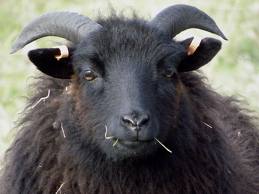
So what is a man considered by many to be the UK’s most influential living literary critic and theorist, doing writing an extended analysis and interpretation of the eighteenth century nursery rhyme Ba Ba Blacksheep in his latest book How to Read Literature?
Might there be some hitherto unknown political significance to this rhyme revealed by Eagleton’s Marxian view of literature? Or a social comment about racial tensions uncovered by a post colonial reinterpretation? The simple answer is no. Eagleton’s analysis is far more entertaining than either of these approaches. In his analysis, the rhyme becomes a hilarious encounter between a rude man and a sheep with a chip on his shoulder when he (or maybe she) isn’t afforded the normal courtesy of being addressed by name.
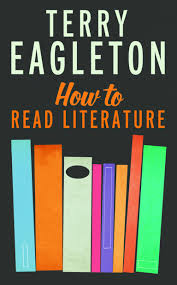 Deeply entertaining yes. But Professor Eagleton does have a more serious point to make — that literary works lend themselves to multiple interpretations with the ‘meaning’ depending on the reader’s own perspectives. Nor is the ‘meaning’ fixed in time and. Rather …….
Literary works may best be seen not as texts with a fixed sense, but as matrices capable of generating a whole range of possible meanings. They do not so much contain meaning as produce it.
In How to Read Literature, Eagleton shows how readers can get a deeper understanding of literary works by closely examining aspects such as tone, ambiguity, syntax as well as the formal aspects of character and narrative voice in five sections “Openings”, “Character”, “Narrative”, “Interpretation” and “Value”. He ranges far and wide across different texts, taking in poetry, drama as well as novels, providing insights into a large range of authors as diverse as Shakespeare, E M Forster and J K Rowling.
The introduction describes How to Read Literature as a text for students new to the study of literature as well as people who want to deepen and enrich their reading experience. To fully appreciate it, does require a fair knowledge of different works of literature but Eagleton never gets so far into dissecting a particular text that you feel overwhelmed. It would be a great companion read to that other classic, David Lodge‘s Art of Fiction.
About this book
My copy of How to Read Literature, published earlier this week , was provided by NetGalley.




We're all friends here. Come and join the conversation