
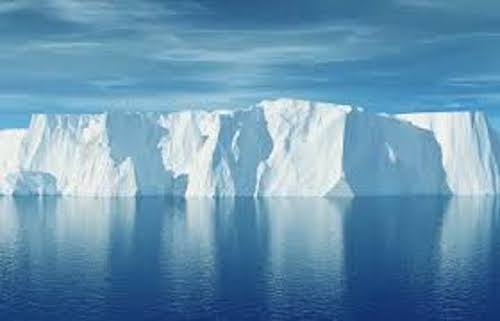

According to a report I read recently, the British explorer Preet Chandi is putting the final touches to an expedition which she hopes will make her the first woman to travel solo to the North Pole. Chandi admits this will an “insanely hard” challenge involving seven hundred miles walking across moving sea ice in temperatures of -50C (-58F) with, at best, only a 10% chance of success.
Reading news like this always gets me wondering what makes people want to punish their bodies by attempting to conquer the world’s most inhospitable places. It can’t be just be, “because it’s there” as Edmund Hilary said about his conquest of Mount Everest.
Are these adventurers driven by more than adrenalin, a love of risk or the burning desire to conquer the seemingly unconquerable?
This is a question that comes up in A Victim of the Aurora, Thomas Keneally’s novel about the (fictional) ill-fated New British South Polar Expedition in 1910.
The tale is told from the perspective of Anthony Piers, the expedition’s official artist. Now in his nineties and a resident of a care home, he recalls the perilous journey and the challenges of survival in raging winds, extreme cold and absolute darkness. What made them do this?
If we were asked why we had offered ourselves for at least a year and a half of isolation far more intense than the isolation of astronauts in command modules, we would have said we were doing it because we loved adventure or because it was a manly thing to do. They would have been the orthodox replies for that age. …. we believed in duty and believed as well that what we were doing was sane and not suspect.
That might have been the official line but what Piers reveals is that some members of the expedition have other less noble reasons for isolating themselves in the Antarctic. Chief among them is the renowned journalist Victor Henneker, a thoroughly nasty man who loves to keep records of other people’s secrets and use them as grounds for blackmail.
As a consequence, when his frozen and battered corpse is found out on the ice, there’s a long list of suspects because more than a few of the expedition team were ensnared in Hennigen’s web.
Some stand accused of homosexuality, others of adultery. It falls to the expedition leader Captain Sir Eugene Stewart with the aid of Piers and the chief scientist Alec Dryden to decide which of the twenty-five carefully selected men was a murderer. The trail to the truth uncovers mental disturbance, illegitimacy, homosexuality and cannibilism.
Victim of the Aurora has the claustrophobic atmosphere of the locked room mystery novel. No-one can get onto or off the ice field undetected which leads the expedition members to one conclusion — one of them is the murderer.
The effect this knowledge has on the team is the real interesting element of the book. These men live cheek by jowl, each man dependent for his survival on the other team members. How can they trust each other to keep the equipment in good order, and the dogs and horses alive when they don’t know if the man sharing the next bunk is a murderer?
The quicker they can identify the perpetrator the better so the men can devote their full attention to to their experiments and scientific observations. But then what? For the expedition leader Captain Stewart, there is no easy answer. The final pages of the novel see him presented with a moral dilemma about justice.
I’d never heard of this book until I saw it recommended by Lisa @ANZLitLovers. it was just as good as Lisa indicated.
Victim of the Aurora is really well constructed — the murder is interesting but is there just as a device to raise broader questions about society’s attitudes to homosexuality, adultery and moral responsibility.
On top of this we’re treated to a deeply evocative picture of life for polar explorers in the early part of the twentieth century. It’s no coincidence that Keneally gives us such a robust and rich experience — he wrote from personal knowledge having been a guest with an American expedition in 1968. So when he writes about the sounds and smells and the terrifying yet wonderous landscape, about the raging winds, bitter cold and absolute darkness, we know these are not just figments of his imagination.




We're all friends here. Come and join the conversation