
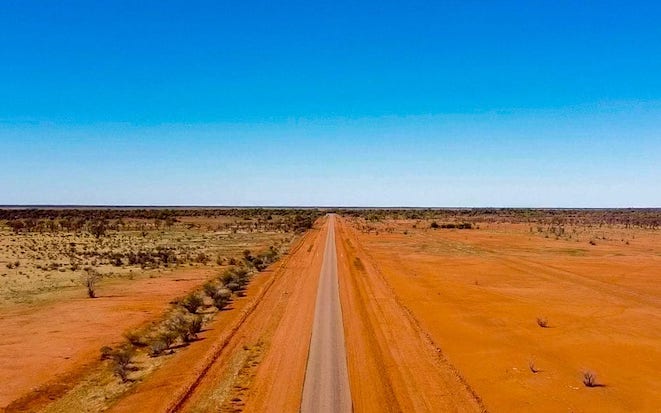

Australian author Jane Harper’s third novel, The Lost Man is a twisty murder mystery that’s as rich in atmosphere as her previous novels.
It opens with a horrific image of a man alone in the scorching heat of the Australian outback. Hours from the nearest habitation and out of water, he crawls in the sand trying to stay in a narrow band of shade from a gravestone.
His body is eventually found curled up by a grave that has been the source of local ghost stories told and re-told over many years.
The dead man, Cameron (Cam) , is one of three brothers who farm on vast cattle properties in Queensland. Cam’s older brother, Nathan, and their youngest brother, Bub, are as perplexed as the policeman assigned to investigate the death.
Many things just don’t add up. What was Cam doing by the grave when he was supposed to be fixing a faulty radio mast 200 kilometres away? Why was his Land Cruiser abandoned nine kilometres from the grave, keys on the front seat and fully stocked with supplies?
As his eldest brother, Nathan digs into the mystery, the questions keep coming and the discrepancies pile up.
It’s a good plot and well paced with plenty of satisfying red herrings and revelations about the brothers and their family members. This is a family with many secrets about to be exposed, each new disclosure throwing up new possibilities about how and why Cam died.
My interest wasn’t so much in the plot however but in the
setting.
My knowledge about the Queensland outback is scarce, limited essentially to a few facts: it’s sparsely populated and there are huge distances between one settlement and another. What I hadn’t appreciated until I read The Lost Man was the reality of life in this area.
It’s a harsh and lonely form of existence.
Harsh because of the weather. Blistering temperatures during the summer months, and cold nights — potentially dropping to zero — during winter.
Lonely because families living here are so far from their nearest neighbours or any form of settlement.
Nathan’s farm borders the land tended by his two brothers but they’re not exactly near neighbours — it takes Nathan at least three hours’ drive to visit his brothers and mother. Four hours to drive to the nearest town. No wonder the local cop is worried about Nathan’s mental health.
Life out here is hard. We all try to get through the best way we can. But trust me, there’s not a single person here who isn’t lying to themselves about something.”
Living in these conditions requires resilience and the kind of planning familiar to crack troops of soldiers. No-one drives out to do a job on the land without logging their destination, ensuring their radio is working and they have a full supply of food and drink in the vehicle and a few spare tyres. It’s a matter of survival in scorching heat and with rescue hours away.
Food needs to be stockpiled in case sudden storms and torrential rain block roads for a couple of months. But if your refrigeration goes on the blink in the meantime, you’ll be stuck until the repair guy gathers enough customers in your area to make it worth his time. Miss the slot and you could be waiting several weeks for the next one.
It’s likely none of this is a surprise to Australian readers but it was all new to me and added a fascinating dimension to the novel.



We're all friends here. Come and join the conversation