
The Franchise Affair by Josephine Tey

Sometimes a classic mystery or crime novel is the only type of book that will satisfy my mood. I don’t want the kind that oozes with blood or is ultra complex but equally the novel shouldn’t be ‘cosy’, or pedestrian.
Josephine Tey’s 1948 novel The Franchise Affair fitted my recent requirements perfectly.
It’s what I would class as an ‘intelligent’ mystery/crime novel. There are no bodies to be counted, no trail of blood, no criminals to be tracked down and unmasked in a grand dénouement (á la Poirot) and no unexpected plot reversals (á la Christie). Instead Tey presents her readers with a puzzle and invites them to follow along with the ‘detective’ as he seeks to find the truth among a knot of lies and inconsistencies.
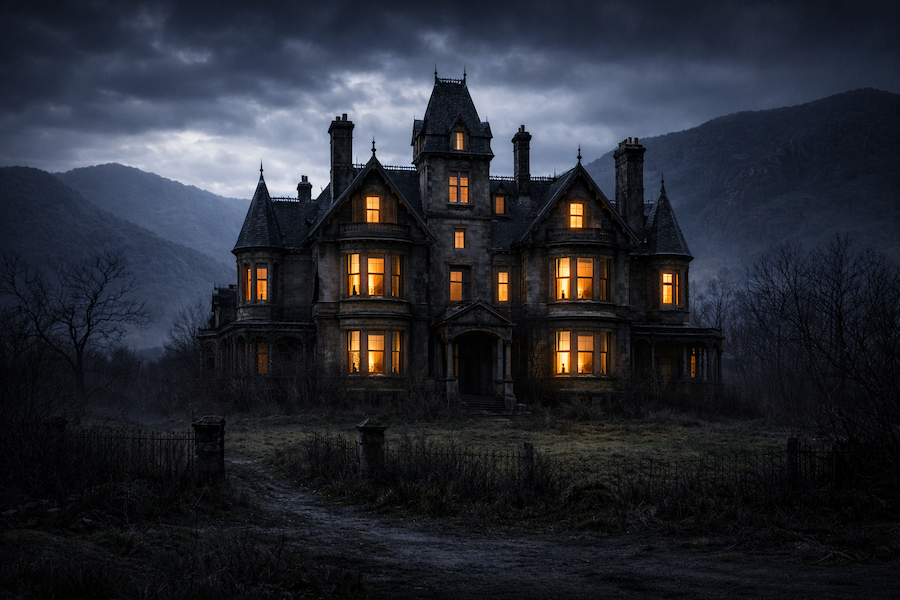
The job of sleuth in this novel falls on the shoulders of Robert Blair, a respected solicitor in a respected family law firm in the country town of Milton. He’s called upon to defend Marion Sharpe and her mother who live in “The Franchise”, an imposing house on the outskirts of town.
They’re accused of kidnapping fifteen-year-old Betty Kane, holding her prisoner for a month and beating her when she refuses to do their cleaning. This is far from Robert’s usual kind of case but he’s been feeling lately that his life is rather unexciting and predictable. He’s rather taken with the Sharpe women and their sensible, forthright manner but he distrusts Betty’s story even though she can describe accurately items and rooms inside The Franchise.
Robert begins a painstaking search for clues that will prove his clients’ innocence and reveal that Betty is more of a cunning minx than the butter-wouldn’t-melt figure she presents to police and jurors.
Media ethics in the spotlight
The Franchise Affair is a cleverly paced novel. The first half is very much about Robert’s inability to find the holes in Betty’s story. Though he learns some surprising facts about her, he’s frustrated there is no real breakthrough. The second half has more tension; a race against time as the Sharpe’s find themselves arrested and the evidence appears to be firmly stacked against them.
Beyond the mechanics of the investigation lies a well crafted portrayal of how the media and a community react to a scandal in their midst.
Marion Sharpe and her mother were already viewed with suspicion in the town. They’re ‘outsiders’, for one thing and have acquired a reputation for being rude. The conservative townies think Marion looks like a gypsy with her dark hair, browned skin and colourful scarves. Perhaps, it’s whispered, they are witches…
The people of Milton find it easy to believe that these women who live in a ramshackle ugly house behind large gates, could be kidnappers and abusers. They find it equally easy to believe in Betty’s story, particularly when the girl’s youthful appearance and clothes makes even sober men think of “forget-me-nots and wood-smoke and bluebells and summer distances.”
This is a novel about the way people jump to conclusions. The townsfolk assume Betty is innocent because she looks that way and because she was orphaned during the war . They assume Marion Sharpe and her mother are wrong-doers because they live in a large house (hence must be wealthy) and are a little odd.
Tey clearly doesn’t have much time for people like this. But she is even more disapproving of the way the media feed their prejudices. One newspaper, the Ack-Emma is described as:
… the latest representative of the tabloid newspaper to enter British journalism from the West. It was run on the principle that two thousand pounds for damages is a cheap price to pay for sales worth half a million.
The Ack-Emma’s sensational headlines are instrumental in whipping up public animosity against the Sharpes. They take Betty’s story at face value, publish a picture of the Sharpe’s house (which then becomes a target for vigilantes) and allow abusive missives about the Sharpes to appear in their letters’ page. Tey’s narrator bemoans this new style of reporting. Time was, says the narrator, when newspapers could be relied upon to exercise sound judgement about the contents of their editions. But newspapers like Ack-Emma’ don’t confirm to those old principles.
However the narrator also acknowledges the Ack-Emma’s new style of reporting has clearly found favour with readers since sales had boomed and “in any suburban railway station seven out of ten people bound for work in the morning” were reading its pages.
Faultless characterisation
The Franchise Affair is a darn good story pepped up with sparky social commentary. It also has some first class characters. Robert Blair is a joy as the lifelong bachelor with a peaceful life. He has tea and biscuits brought each day to his desk on a on lacquered tray covered with a clock. He can clock off work after the post has gone at 3.45pm, just in time for a round of golf before dinner. He’s also waited on hand and foot by a devoted aunt). I
His client ‘old’ Mrs Sharp is a fun character. Her acerbic tongue matches her name but she has has an equally sharp eye for spotting a winning race horse.
Pride of place however goes to one of the members of the supporting cast; Robert’s Aunt Linn: “a solid little figure with the short neck and round pink face and iron-grey hair that frizzed out from large hairpins.” She’s a woman perfectly content with her life which revolves around recipes, church bazars and film star gossip gleaned from magazines. Though she’s not too keen on her nephew taking on the Sharpe’s case because the people at The Franchise “aren’t the kind of people I naturally take to” she is one of the few people in Milton who doesn’t let appearances get in the way of a desire for justice.
Though there are aspects of The Franchise Affair that situate it in a particular period (a post-war England which still has the death penalty) it deals with issues that are still relevant today. Questions about media responsibility and accountability and the way communities take ‘justice’ into their own hands, are just as pertinent in 2019 as they were in 1948.
About the author
 Josephine Tey was the pseudonym of Elizabeth MacKintosh who was born in Inverness, Scotland in 1896. She also wrote plays under the name Gordon Daviot, a surname that might have been chosen because it was the name of the place near Inverness where she spent family holidays.
Her first published work appeared under the name of Gordon Daviot in The Westminster Gazette in 1925. Her first mystery novel, The Man in the Queue, was published in 1929, marking the first appearance of Inspector Alan Grant from Scotland Yard. Grant makes a few brief appearances in The Franchise Affair.
Why I read this novel
I read and enjoyed another of Tey’s novels, The Daughter of Time in 2017. It’s an unusual novel, an investigation into the mystery of a historical event (the deaths of the Princes in the Tower). I was taken by her writing style, enough to want to read more of her work and luckily found a copy of The Franchise Affair in a charity bookshop. Incidentally this novel was included in a list of recommended crime novels published by The Sunday Times.





We're all friends here. Come and join the conversation