
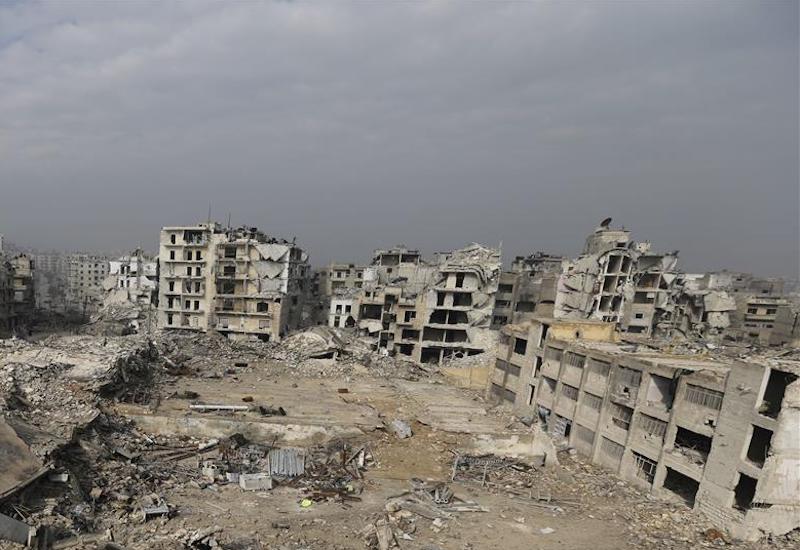

The Beekeeper of Aleppo shows the human side of migration; a dimension noticeably absent in the political rhetoric that has dominated UK news channels in the last few weeks.
Behind the statistics bandied about so readily by those politicians, are people. Individuals who, for one reason or another, have left their homeland and travelled thousands of miles in search of a new life in another country.
Christy Lefteri’s narrative is based on the story of one such couple.
Nuri Ibrahim and his wife Afra live in the Syrian city of Aleppo with their only son Sami. Nuri works as a beekeeper with his cousin Mustafa, travelling into the mountains every morning to tend to his hives while his wife paints. Their simple life is ruptured by a civil war that claims their son’s life and causes Afra to lose her sight.
Having lost everything that has given them meaning and purpose, Nuri and Afra decide they must leave Syria and embark on a harrowing, traumatic journey through Turkey and Greece to the UK. Each stage of their journey is fraught with danger and obstacles in the shape of drug dealers, people smugglers and bureaucracy.
All they want is to feel safe but their life is full of unknowns. Nuri’s cousin Mustafa has already made it to the UK but there is no certainly that Nuri and Afra will be similarly successful. Even if they make it to the UK, they may not be granted the asylum that will permit them to stay in the country.
We know from very early on in the book that they do get to the UK though but we don’t know how they get there. In a run down boarding house in Brighton, they, and other refugees face a long and laborious wait to be granted asylum.
With Afra still in shock from her son’s death, it’s Nuri who has to stay strong for both of them but he too is broken by everything they have experienced and witnessed.
Psychological Damage
The couple’s psychological trauma is the most powerful, deeply moving aspect of this novel. In the UK, Afra withdraws into herself, unable to do more than sit on their bed and play with a coloured marble. Nuri’s suffering manifests itself in his inability to distinguish between what is real and what is imagination.
When he sees the seagulls swooping around the boarding house, his traumatised brain thinks they are white planes, dropping bombs all around him.
Four white rockets, falling towards the sea, catching the sun on their wingless bodies, as if they are beautiful. They fall and fall, there’s no stopping them, they won;t turn and fly away, there is only one path. I have seen this before. Many times before. Except, then, I waited for them to crash onto the land, onto hills and rooftops and homes and mosques, onto flowers and monuments, memories and treasures, sending smoke and souls up into the sky.
Lefteri’s novel has a most unusual structure. Nuri’s present day narrative often comes. to an end mid sentence, one or two words on the following page connecting it to the next section which is in flashback.
An an example, page 14 which is set in Brighton ends: “He tells me that he picked it off the lemon tree in .…” The next page bears just one word Aleppo before the narrative gets picked up again on the following page …...”was all dust.” which takes us back in time.
This device was disconcerting at first but actually worked really well to reflect how, for Nuri ,past and present have rolled into one.
The Beekeeper of Aleppo is an incredibly moving and poignant book about people stretched to the limits of endurance. If it was simply a work of fiction it would be powerful but what gives it even more impact is that the book was inspired by the traumatic experiences that Christy Lefteri heard while working as a volunteer at a refugee camp in Greece.
That was in 2016 but it’s dispiriting to think that so little has changed in the last seven years. People displaced by civil war are still made to jump through hoops to find a welcome and a place of safety in another land.




We’re all friends here. Come and join the conversation