

Seascraper is a gem of a novel; the kind that you really hope will win the Booker Prize. Sadly, though the 2025 judges deemed it worthy of longlisting, Benjamin Wood’s novella never made the shortlist let alone walk away with the ultimate accolade. So once again I find myself out of kilter with the judges.
This is a book that sucks you in right from the first page. And then it quietly draws you ever deeper into its strange, tense world. When you’ve reach the final page it’s to discover that you’ve been holding your breath all the time, wondering what direction this story is going to take.
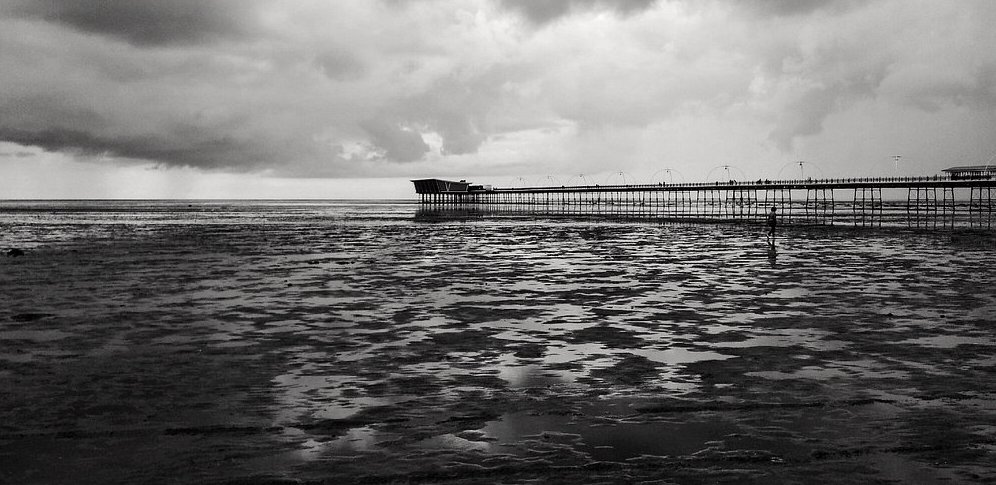
The story is set along the coast near Longferry — a location that doesn’t exist in real life but is based on Southport, Merseyside, where Wood grew up.
It’s along this stretch of the coast that Thomas Flett ekes out a living as a shanker, scraping the sand for shrimps at low tide. He’s been at this work since he was 13 years old and his grandfather pulled him out of school and set him to shanking. He knows every inch of this coastline with its treacherous sinkholes that can swallow man and cart in minutes and can read the moods of the sea from the way light plays on the water.
It’s not much of a life. Every day is the same: awake by dawn to start the day with a smoke and a cuppa, then out with his horse and cart on the sands; dragging his net through rain and fog for hours just to earn a couple of pounds.
Unsurprisingly Thomas yearns to be free of this drudgery.
What ties him to the shanker’s life is not necessity, as such – a steady wage could be acquired by ither means – nor is it a sentimental gesture to the man who raised him. No, there’s something more essential to it…There’s a kind of gravity that holds him here, for definite, but most days he spends yearning to be free of it.
His dreams are not grand or glamorous. He’d love to pluck up the courage to ask Joan Wyeth out for a date but how can he when he stinks of “shrimp rot, fish guts, crab flesh, seaweed, dander, forage, gull shit, horse dung” . He’d also love to sing folk songs in the local pubs but he’s not quite brave enough. So he hides out in the shed plucking away on a guitar his mother knows nothing about.
The arrival of the American Edgar Acheson with his talk of Hollywood and film legends offers hope for a new beginning. According to Edgar, Longferry beach could be the perfect moody location for his new film. He needs to do a recce at night and immerse himself in its atmosphere — for that he requires a guide and there’s no-one better placed than Thomas. For a few hours work, Thomas will get more money than he’s ever had in his life.
What happens that night forms the core of the novel with consequences that neither man could have anticipated.
Seascraper is a heartfelt account of an unfulfilled life. What gives it added power and impact is the richness of its atmosphere. There’s an otherworldly quality to the vision of one man and his horse shrouded in mist as they trudge along a vast expanse of empty shoreline. Yet Benjamin Wood’s attention to detail roots his narrative firmly in the here and now.
All the minutiae of life are rendered precisely, from the clothes Thomas wears, to the harnessing of his horse and the route he takes to reach the beach. None of this detail is redundant; it goes to reinforce the narrowness of this man’s life, showing it juxtaposed with the vast, formless quality of the natural world he inhabits.
Seascraper could be viewed as a simple story yet its themes of hope, duty and ambition are universal. It





We're all friends here. Come and join the conversation