

I didn’t get my wish granted by the fairies who manage the Classics Club spin sadly. I was rather hoping for Rebecca but instead I have ended up with one of the longest books on my Classics Club list: The Old Wives’ Tale by Arnold Bennett.

Bennett was a big name in the early twentieth century though has largely fallen out of fashion now. He may even be better known for the omelette named after him when he ordered one containing haddock while staying at The Savoy hotel.
He wrote about 30 novels, the most famous being those he set in the fictional community he called “Five Towns” — inspired by the Staffordshire Potteries region in which he was born.
The Old Wives’ Tale, published in 1908, is also set in that region. It was apparently Inspired by an old lady that Bennett saw in a cafe, and began to wonder how her life had been when she was younger.
In the novel he focuses on two sisters who grow up as daughters of a shopkeeper in a rural town. Sophia, the defiant, romantic one, runs away to Paris where she marries a cad. Her shy sister Constance remains in England and marries her father’s mild-mannered shop assistant. The sisters are reunited many years later when they are both old, giving Bennet the opportunity to reflect on the effect time and environment have had on their personalities
According to The Encyclopedia Britannica, Bennett’s fiction formed a bridge between the English style of novel and the French realism of authors like Gustav Flaubert and Honoré de Balzac who emphasised detailed description of people and scenes. They describe The Old Wives’ Tale as ” a masterpiece of literary realism.”
Though I have some of his “Five Towns” novels on my Classics Club list, The Old Wives’ Tale will be my first experience of Arnold Bennett. I already know to expect that this will be a slow read – it’s more than 600 pages long and very detailed. This extract from the first chapter gives a taste of his style:
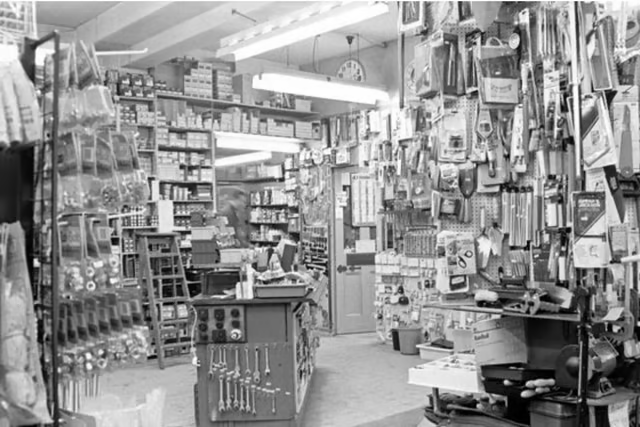
The Baines’s shop, to make which three dwellings had at intervals been thrown into one, lay at the bottom of the Square. It formed about one-third of the south side of the Square, the remainder being made up of Critchlow’s (chemist), the clothier’s, and the Hanover Spirit Vaults. (“Vaults” was a favourite synonym of the public-house in the Square. Only two of the public-houses were crude public-houses: the rest were “vaults.”) It was a composite building of three storeys, in blackish-crimson brick, with a projecting shop-front and, above and behind that, two rows of little windows. On the sash of each window was a red cloth roll stuffed with sawdust, to prevent draughts; plain white blinds descended about six inches from the top of each window.
According to the Classic Club “rules” I have until 29 January to read this book. It works out at just over 22 pages per day which should be doable (famous last words???)





We're all friends here. Come and join the conversation