

When I think about Émile Zola, my mind is filled with characters whose lives are blighted by poverty, vice and alcoholism. Most of the Zola novels I’ve read so far are all about the bleakness of life in late nineteenth century France, its people weighed down by capitalism, industrialisation and political intrigue.
The Dream (Le Rêve) is a shock because it’s so different from everything else in the Rougon-Macquet series. Instead of mines, slums and the corridors of power Zola gives us a cathedral, embroidery threads and saints. And instead of physical passion as in Germinal and The Human Beast, here we have a chaste idealised romance.
The Story
The Dream follows Angélique, an orphan child found shivering in the cathedral porch on a snowy Christmas Day in 1860. She’s rescued by Hubert and Hubertine, master embroiderers whose home nestles between two of the cathedral’s buttresses.
Angélique proves to be a girl much given to extremes of passion. As a child she’s prone to rage and disobedience much to the astonishment of the Huberts.
They no longer recognised the blond girl with violet-covered eyes and long neck graceful as a lily. Her eyes had turned black, her face was twisted with hatred and her sensual neck had swollen as the blood pushed through it.
Under the guiding hands of the Huberts and surrounded by their love, she learns obedience.
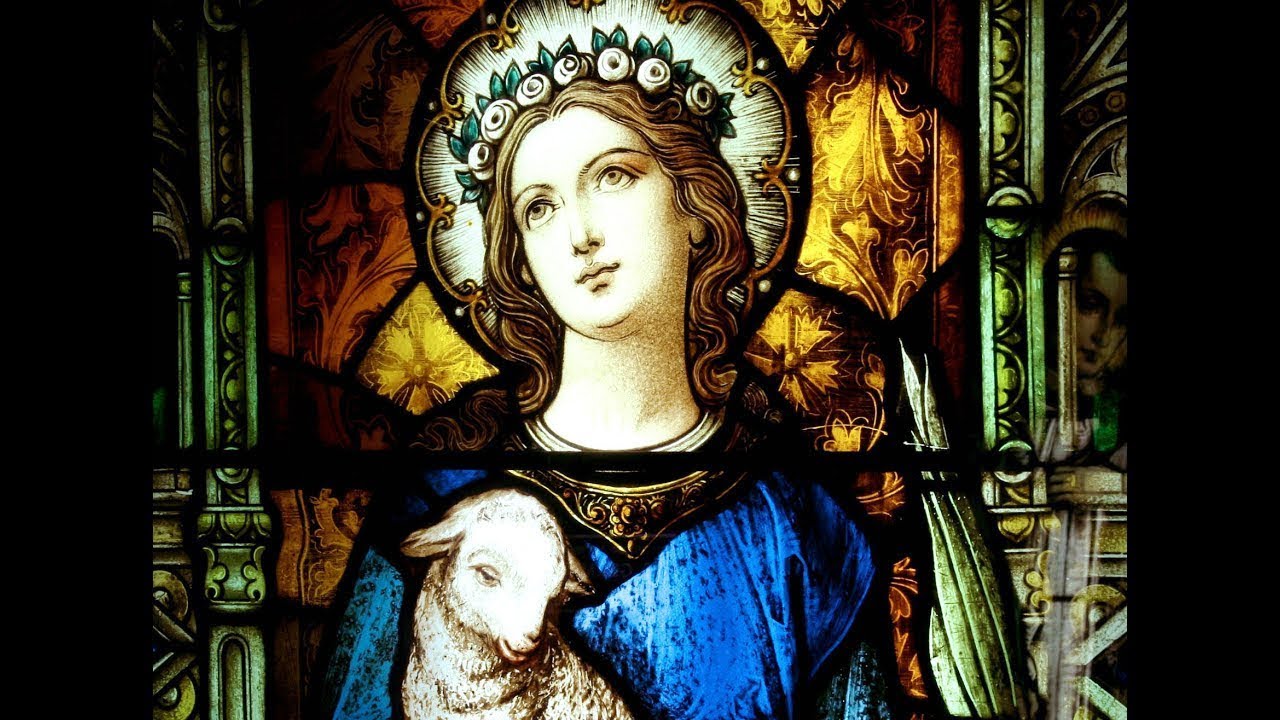
Later on she succumbs to a mania for charitable works and the stories of saintly figures. Obsessed with legends of these saints, Angélique lives in a fantasy world, allowing their stories to shape her own life and her future. As she reads about their struggles against Satan, she becomes convinced that miracles and wonders are “the common rule.” Her own miracle, she believes, will come in the form of a wealthy prince as her suitor.
There’s no prince riding in on his white horse to sweep her away but Angélique gets the next best thing in the shape of Félicien d’Hautecoeur. He’s the son of a wealthy and high-ranking church official and far above her lowly station. Will Angélique achieve the fairy tale ending she dreams is hers for the taking or will opposition from Félicien’s father turn her into a pumpkin?
An experimental novel
The Dream then is part fairy story — an orphan, Christmas Day, a blonde haired, fair skinned heroine and a Prince Charming. But it’s surrounded by ideas about the power and the danger of unquestioning belief. Angélique’s spirituality is so absolute, that Zola indicates it becomes unnatural and ill prepares her for the reality of life.
The fairy tale elements seem very much at odds with the rest of the Rougon-Macquet series. Paul Gibbard’s introduction to my Oxford World Classics edition, explains that Zola set out to something different with this novel.
I would like to write a book that no one expects of me. First of all, it must be suitable to be placed in anyone’s hands, even the hands of young girls. So no violent passions then, a simple idyll […] a bit of psychology then, or what passes for such (!) That is, a moral struggle, the eternal struggle between passion and duty […] And, finally, I’d like to work into the books something of the supernatural, the dream, the unknown, the unknowable.
The Dream is certainly different and yet it’s still recognisably a Zola novel. We still have the attention to detail that’s typical of his work and there are also indications that he hasn’t abandoned his belief in naturalism.
Generally speaking Zola’s characters have no free will. Their behaviour is shaped and determined by heredity, environment and social forces. They may try to break away, but in the end they cannot. If you’re born into a family of alcoholics, then you too will take to the drink. Brought up in a world of prostitution and you’ll probably end up in the same “profession” yourself.
Angélique does have a stain on her character — her mother is a slut according to acquaintances in Paris, is in debt and engaged in a multitude of dubious activities. In other novels, this inheritance would have been enough to push Angélique into prostitution herself, but in The Dream she’s given the benefit of the doubt. Instead of falling from grace she’s redeemed by her diligence as a talented embroiderer and her calm demeanour.
And yet it’s clear that Angélique is still conditioned by her environment, only this time it’s not one of drinking houses, slums and coalmines, it’s one of religious art and saintly lives. Those influences lead her not to happiness but to self-sacrifice.
So Zola hasn’t abandoned naturalism, he just changes the factors that influence and determine a character’s fate.
Enjoyable?
It’s fascinating to see how Zola mixes social realism with a fairy tale romance. Though if The Dream had been the first novel I read by Zola, I wonder whether I would have been keen to read any more. It’s a visually beautiful novel, with a multitude of images and patterns. While I enjoyed the richness of the detail about the embroiderers’ work, reading page after page about saints and martyrs was tiresome. I much prefer his more gritty novels.



We're all friends here. Come and join the conversation