
I’d love to have been a fly on the wall when booksellers debated where in their store to place Drive Your Plow Over the Bones of the Dead.

In the crime section maybe? It does feature three murders. It also wouldn’t look out of place with the thrillers while the more creative bookstores might group it with novels on an environment theme or as part of a feminist fiction display
Really, Olga Tokarczuk’s defies categorisation. A murder mystery containing existential questions and astrology. A dark comedy threaded with the poetry of William Blake. A literary narrative about man’s inhumanity towards animals. It’s all of these things.
That’s a rich recipe for any book and if it wasn’t for Olga Tokarczuk’s credentials (she’s the recipient of a Nobel prize for literature) it could have turned out to be a complete mess. Instead it was a riveting read.
At the heart of the novel is Janina Duszejko, a bridge engineer by training who is now working part time as a schoolteacher. She lives in a small village on a high plateau in Poland, near the border with the Czech Republic. It’s a solitary life, especially in winter when the holiday homes are empty and snow makes driving treacherous. But she doesn’t seem to find that a problem — the solitude enables her to devote more time to her twin passions of astrology and animal rights.
Janina’s quiet life is overturned by a series of mysterious deaths in the village. The first to die is Janina’s neighbour, followed soon after by the demise of the local police commissioner; a wealthy businessman and the local priest. They’ve all been murdered but the question is by whom?
“I realise I have little sympathy for the dead. They’re in a better world now, free of suffering. It’s us, the living, who have to carry on in this hell.”
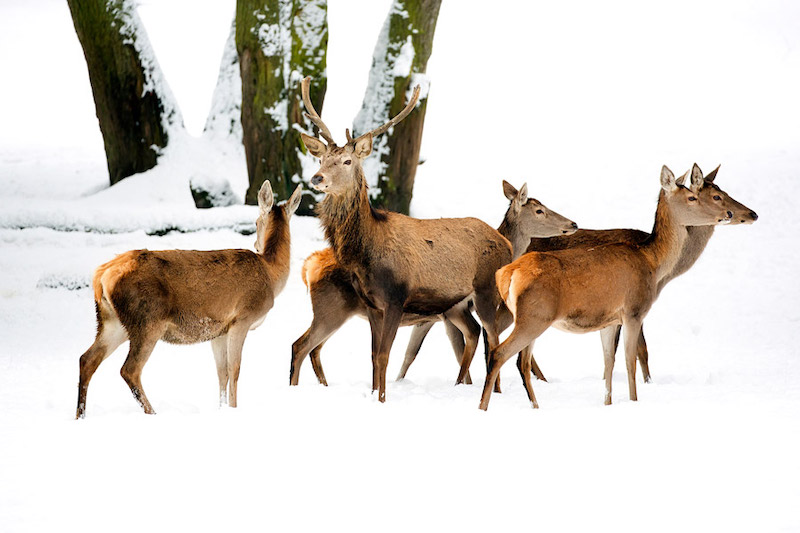
Janina becomes convinced that the animals in the forest, particularly the deer, are taking revenge on these men. They were all involved in hunting and in Janina’s eyes, they have now paid the price for their cruelty towards wildlife. Few people (especially the police) pay any heed to her theory. They just write her off as an old eccentric woman.
As the story develops, Olga Tokarczuk raises questions about the morality of hunting; the symbiotic relationship between humans and animals. and free will versus determinism. These heavyweight topics don’t overwhelm the narrative however because they are balanced by a rich vein of dark humour coming from Janine’s unique perspective on life.
Early on in the novel for example she tells us she’s “at an age and additionally in a state where I must always wash my feet thoroughly before bed, in the event of having to be removed by an ambulance in the Night”. She also has the amusing habit of re-naming her acquaintances according to their natures or physical traits. So we get Big Foot, Oddball, Dizzy and Good News.
What a lack of imagination it is to have official first names and surnames. No one ever remembers them, they’re so divorced from the Person, and so banal that they don’t remind us of them at all. What’s more, each generation has its own trends and suddenly everyone’s called Magdelena, Patryk or – God forbid – Janina. That’s why I try my best never to use first names and surnames, but prefer epithets that come to mind of their own accord the first time I see a person.
This is a challenging book because it forces readers to think about attitudes to people whose way of life and beliefs don’t conform to “accepted norms” and also because it constantly changes tack. I would have welcomed fewer digressions into astrology (Janine believes the position of the stars can help make sense out of chaos) but still relished Janine’s uniquely fresh take on life.
In case you’re wondering, the strange title of this book and its unusual spelling of “plow” come from the poem The Marriage of Heaven and Hell by William Blake.
Blake has a key role in the book. Every chapter begins with an epigraph using a quotation from one of his poems. One of Janine’s friends is translating Blake into Polish when he’s not on duty as a police officer and the pair regularly get together to tackle some thorny questions of translation. Janina views Blake as a kindred spirit because like her, he also questioned the established order and sought deeper truths beyond surface appearances.
All of those quotations and references set me off on a digression of my own. But it’s no hardship to revisit Blake’s poetry.




We're all friends here. Come and join the conversation