
I’m not a big reader of series so it’s been a challenge to reach the magical 10 for this week’s Top Ten Tuesday topic: Authors I’ve Read the Most Books By.
Maybe I made it too difficult by setting a threshold where in order to make the list, I decided I would limit myself to authors I read as an adult. Plus I had to have read at least five of the author’s works. I ended up with just eight names.
They are a mix of contemporary authors and those from the literary canon of past centuries. Some are authors whose full body of work I would love to read. Others are favourites from past years that have not lasted the course because my reading tastes have changed. I wonder whether this list will change again in the future. Maybe I should repeat the exercise five or ten years from now .
One important thing to mention however. This list is simply a record of authors I’ve read most often, not the authors I consider my favourites. There’s no George Eliot for example. Putting the list together I realised I still have three of her novels to read: Daniel Deronda, Felix Holt and Romola. I sense a little reading project might be in the offing.
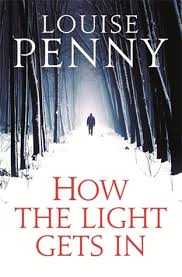
Louise Penny
By the time I came across Louise Penny’s crime fiction she had already published eight titles in her series set in Quebec. Her setting in the tiny village of Three Pines won me over, as did her protagonist, Armand Gamache of the Sûreté du Québec. She’s published a total of 15 books in the series – 16th is due out later this year – of which I’ve read eight. My favourite? That’s a hard one. I think I’m going to go for How The Light Gets In.
Kate Atkinson

My first experience of Atkinson was via her debut novel Behind The Scenes at the Museum which chronicled the lives of six generations of women. I’ve since gone on to read six more of the the 10 books she’s had published. Some of these were not to my taste (I couldn’t finish Life after Life and really disliked Transcription) but when she’s on form, she’s highly enjoyable. Her Jackson Brodie series of detective novels (adapted into the BBC series Case Histories) is first class and like her many other fans I was delighted when she returned to this series in 2019 after a 11 year gap, with Blue Sky.
Ian McEwan

There was a time when I lapped up everything written by McEwan. But in recent years my interest has waned significantly. The turning point was Saturday published in 2005 which I found tedious and pretentious. I’ve read seven of his novels. From his early years, I enjoyed Black Dogs and The Innocent. Of his more recent works, my all time favourite is Atonement.
William Boyd

Another author I no longer enjoy as much as I did. I’ve read six of his novels. The best of those from the twentieth century is I think Brazzaville Beach which tells the story of a woman who is in Africa researching chimpanzees. This century, the outstanding novel has been Any Human Heart, a tremendous story of one man’s life; his attempts at a literary career, several marriages and meetings with a host of famous people. Nothing Boyd has published since has come anywhere close to the quality of that novel and the most recent one I read, Love is Blind, was just awful.
Graham Greene

If you’d asked me in the 1980s whether Graham Greene was one of my favourite authors, you’d have been met with an unequivocal answer in the negative. He’d been on the syllabus for my final English literature module at university and I had unwelcome memories of having to rush through his books. But time has moved on and I’ve come to more deeply appreciate his work, particularly those labelled his “Catholic novels.” My favourite is The Heart of The Matter which portrays a fundamentally decent man taken down the path to a crisis of conscience and despair.
Émile Zola

I’ve barely touched the surface with Zola’s work. I’ve read seven of his novels; Thérèse Raquin, a dark novel of murder and adultery and six of the 20 titles in his Rougon-Macquart cycle. I’ve yet to read one that hasn’t impressed me with its multi-faceted portrayal French society and life in the nineteenth century and its undercurrents of passion and ambition. My favourite is the novel I read first, Germinal, but L’Assommoir, the story of a working class woman in Paris, is a close second.
Charles Dickens

Like so many readers I was introduced to Dickens at an early age via Oliver Twist. It took me a few decades to warm to him. Yes he can be frustrating (he does so like to digress) and yes his plots are highly dependent on coincidences, but boy can he tell a good yarn. I’ve failed to finish two: Bleak House (I’ll return to it one day) and A Tale of Two Cities). Of the eight novels by him that I have finished, my favourites are Great Expectations (the first encounter by Magwitch and young Pip is unforgettable) and Dombey and Son (especially for its breathtaking scene involving a train).
Jane Austen

When I read Jane Austen as a teenager I was puzzled by descriptions of her as a supremely ‘witty’ author. I couldn’t see anything approaching wit in what I was reading. It wasn’t until I read her as an adult that the penny dropped and I fell in love with her writing. I’ve read all her novels bar one, Lady Susan. Last year I read one of her unfinished works, Sanditon, when a new Oxford World Classics edition was published to coincide with a TV adaptation. She’s an author I feel I can return to again and again and still find something new to enjoy. My favourite? I never tire of Pride and Prejudice but the quieter, more thoughtful Persuasion, has the edge.
Top Ten Tuesday is hosted by That Artsy Reader Girl, Discover what other bloggers put on their lists by clicking this week’s blog page


We're all friends here. Come and join the conversation